This spring, a Fortune 500 company brought its people together in Berlin and gave part of the agenda to something a little different: building menstrual care kits for local food banks, including Berliner Tafel. If you work in sustainability, ESG or people teams and are looking for ways to bring your social commitments to life, here's how it came together.
Where the idea of the Tafel began
Founded in 1993, Berliner Tafel is Germany's oldest food rescue organization. It collects good food that would otherwise go to waste and passes it on through more than 400 social programs and 48 food distribution points across the city. What started in Berlin is now a nationwide movement, with Tafel food banks in every German state, including neighboring Brandenburg.
Berliner Tafel founded, the first in Germany
Tafel across Germany today
people supported by the Tafel, nearly a third of them children and young people
What happened on the day
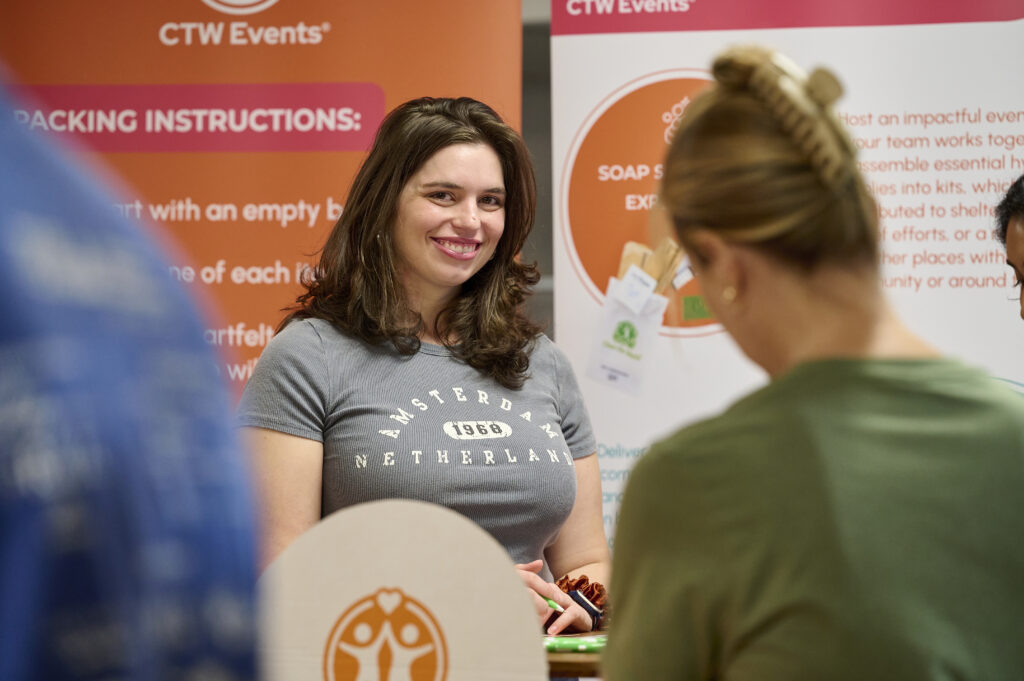
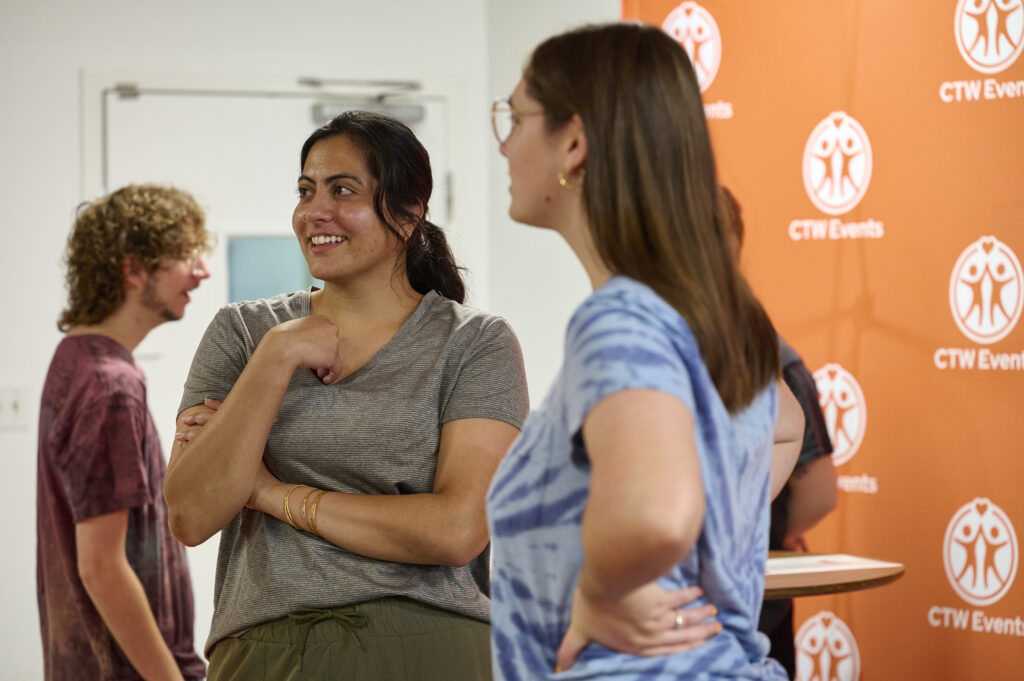
Colleagues worked side by side, putting everyday menstrual care products together into finished kits. Because the kits were going to Tafel food banks in and around Berlin, the task connected straight back to people living in the same city.
By the end, there was something everyone could see: boxes of finished kits, packed and ready for the Tafel teams.
A monthly essential that's easy to overlook
Period products are something most of us never think twice about. For others, they're a monthly cost that's hard to cover. A European Parliament research briefing estimates that around 10% of people who menstruate in the EU experience menstrual poverty, meaning they don't have enough access to period products and facilities. It's more common among people on low incomes, refugees, young people and people with disabilities.
A ready-made kit means one less thing someone has to find the money for that month.
From first conversation to the last packed box
The company brought its people together. We handled the materials, the logistics and the charity partners.
- Step 1
Planning around the agenda
We worked with the company to fit the build into its program, so it felt like part of the day, not an add-on.
- Step 2
Designing the build
We set up a menstrual care kit build that suited the group and the charities receiving the kits.
- Step 3
Sourcing the materials
We sourced the products and packaging for every kit and prepared them at our European hub.
- Step 4
Delivery to Berlin
We shipped everything to the company's Berlin site ahead of the day, ready to build.
- Step 5
The session
Colleagues built the kits together, with everything they needed already in the room.
- Step 6
Working with the charities
We coordinated with Berliner Tafel and the Tafel network in Brandenburg on what they needed and how the kits would reach them.
How a session like this supports your social commitments
Most large companies already have commitments around their people and the communities they work in. These usually sit under the "S" in ESG. A kit build gives those commitments something practical to point to.
Community support
Kits built for a named charity partner, agreed with you before the day.
Employee participation
Colleagues take part together, in work time, inside an event that's already happening.
A clear record
Agreed figures, such as kits assembled, plus photos from the day for internal updates and social impact reporting.
One session won't meet an ESG target on its own. It works best as a visible, practical part of a wider program.
Ideas for your own event
Every session is shaped around your event and the charity you're building for. Here are a few ideas to get you started.
Give a network gathering a shared task
A women's network or employee resource group meeting is a natural fit for a menstrual care build.
Pick a date that means something
Plan around International Women's Day on 8 March or Menstrual Hygiene Day on 28 May.
Add it to an offsite or kick-off
Give one slot of the program to a whole-group build that finishes with something everyone can see.
Open it up at a conference or office day
Run a drop-in build across breaks or registration, so people can join between sessions.
Add a personal touch
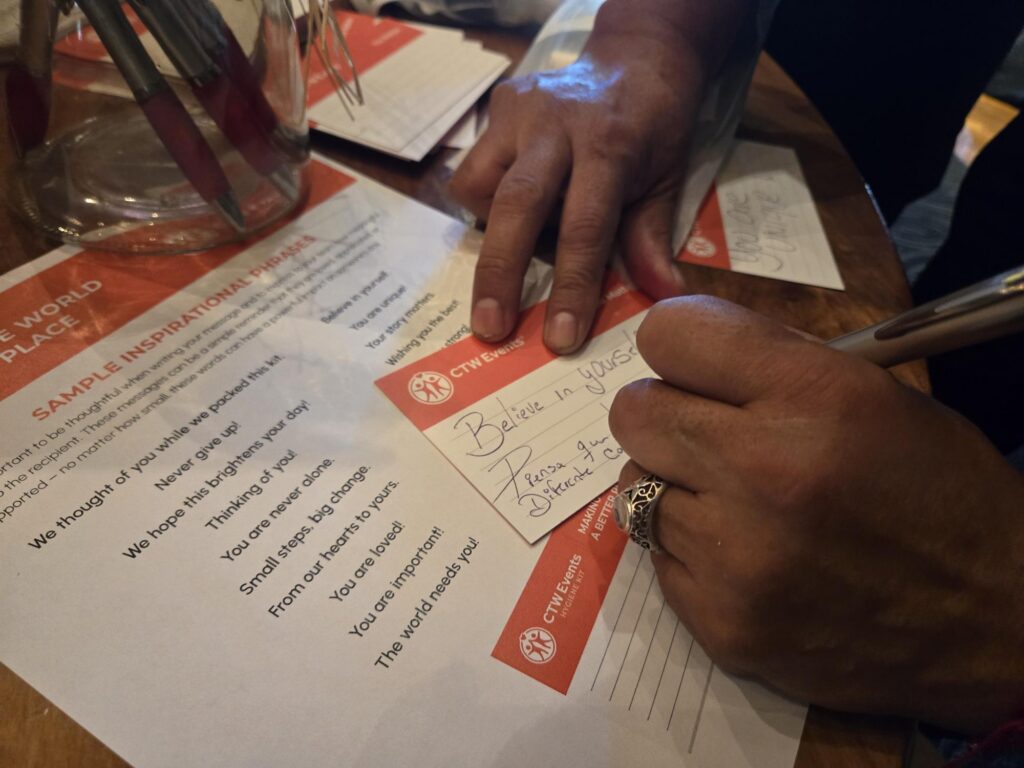
Invite everyone to write a short handwritten note to tuck inside each kit.
Choose the kit that fits
Alongside menstrual care, consider hygiene kits or school supply kits. Specialist kits are agreed with the charity first.
Your questions, answered
Can we run a menstrual care kit build at an event in Europe?
Yes. Menstrual care kits are a custom build, agreed with the receiving charity, alongside our standard hygiene kits and school supply kits for the UK and Europe.
Can a kit build support our ESG and social impact goals?
It can add a practical, documented community activity to your social impact story. We agree with you which figures to report, such as kits assembled. It works best as one part of a wider program rather than a replacement for it.
Who receives the kits?
A charity or community partner, agreed before your session. In Berlin, the kits were built for Berliner Tafel and the Tafel network in Brandenburg. We match the kit contents and quantity to what the partner can use.
How much does our team need to organize?
Very little. We source the products, prepare the materials, deliver everything to your venue and coordinate with the charity. Whether our team runs the session on site or your colleagues lead it themselves, along with group size, timing and space, is agreed in your proposal.
How far ahead should we get in touch?
As soon as you have a date and a city. Lead times depend on the kit type and group size, and we confirm them in your proposal.
A big thank you to everyone who took part in Berlin, and to Berliner Tafel and the Tafel teams in Brandenburg for the work they do every day.
Planning a gathering in the UK or Europe?
We'd love to hear about it. Tell us the date, city and rough group size, and we'll come back with ideas for a session that fits your agenda.
Request a proposalMore examples: IMEX Frankfurt 2025 and the Royal Horseguards Hotel, London.
CTW Events plans and delivers social impact kit-building activations at corporate events, conferences and offices in 28 European countries, including the UK.- Berliner Tafel, International Support, accessed November 2026.
- Tafel Deutschland, English Information, accessed November 2026.
- European Parliamentary Research Service, Addressing menstrual poverty in the EU, May 2025.