
Soap, toothpaste, shampoo. It is easy to assume everyone can restock them without a second thought. Yet right now, across the UK and Europe, millions of people are rationing these everyday basics, going without them, or choosing between a bar of soap and a meal. Hygiene poverty is not a faraway problem. It is happening in our own cities, often to people who are working, raising families and doing everything they can to keep up.
What is hygiene poverty? Hygiene poverty means not being able to afford the basic products you need to stay clean, such as soap, toothpaste, shampoo, deodorant and laundry detergent. In the UK, an estimated 4.2 million adults live in hygiene poverty, according to The Hygiene Bank and YouGov. In France, 43% of adults have cut back on hygiene products for budget reasons, according to the 2026 Ifop barometer for Dons Solidaires.
A Need Closer to Home Than Many Realise
Running out of toothpaste usually means picking up another tube, so it is easy to assume the same is true for everyone. Across the UK and Europe, many people are finding that it is not, and hygiene poverty can affect anyone, including people we work alongside every day.
In the UK, The Hygiene Bank and YouGov estimate that 4.2 million adults were living in hygiene poverty in 2024, an increase of 1.1 million since the charity’s previous research in 2022. According to The Hygiene Bank, 69% of adults in hygiene poverty have had to choose between paying for essentials like food and bills and buying basic toiletries. And 65% of affected parents have had to choose between hygiene products for themselves and for their children.
Those are hard choices, and families make them with real care, often putting their children first. Hygiene poverty is often hidden, which is why it so often goes unseen. Local charities and hygiene banks are frequently where people turn, and they know their communities best. Those are exactly the partners CTW Events works with.
The Cost of Living Has Turned Toiletries Into a Trade-Off
When rent, energy and food take a bigger share of every pay packet, everyday essentials are often the first thing to go. They look optional on a household budget. They are not optional in real life.
In France, the sixth Hygiène et Précarité barometer, carried out by Ifop for the charity Dons Solidaires and published in April 2026, found that 43% of adults say the current economic climate has led them to cut back on hygiene products for budget reasons. Close to 4 million people now go without at least one essential such as soap, toothpaste or nappies, compared with 3 million in 2019. The 2026 edition puts a spotlight on a group many people overlook: working people on low incomes, for whom having a job no longer guarantees the basics.
Zoom out to the whole European Union and the pressure is easy to see. In 2025, 20.9% of people in the EU were at risk of poverty or social exclusion, according to Eurostat. Not everyone in that group goes without hygiene products, but it shows how many households are living with very little room for the unexpected.
Why a Hygiene Kit Matters More Than You Think
A toothbrush is a small thing until you do not have one. Clean hair, fresh breath and a bar of soap are part of how we all show up for the day: a job interview, the school run, a doctor’s appointment or simply meeting a friend. When those basics are within reach, people can show up for the day on their own terms. Every kit is about making that a little easier.
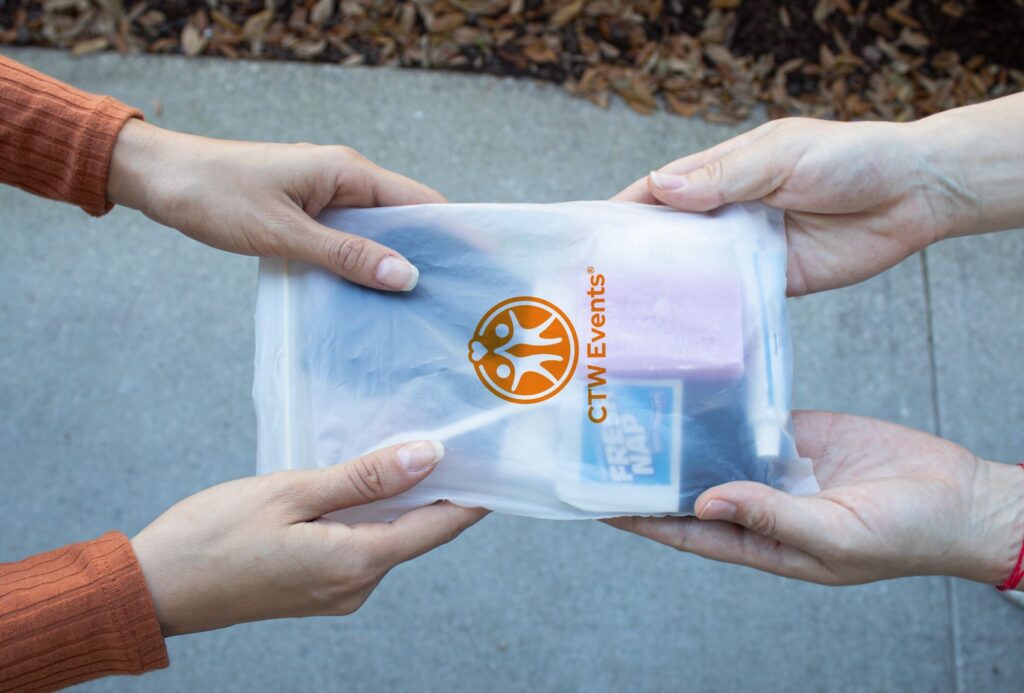
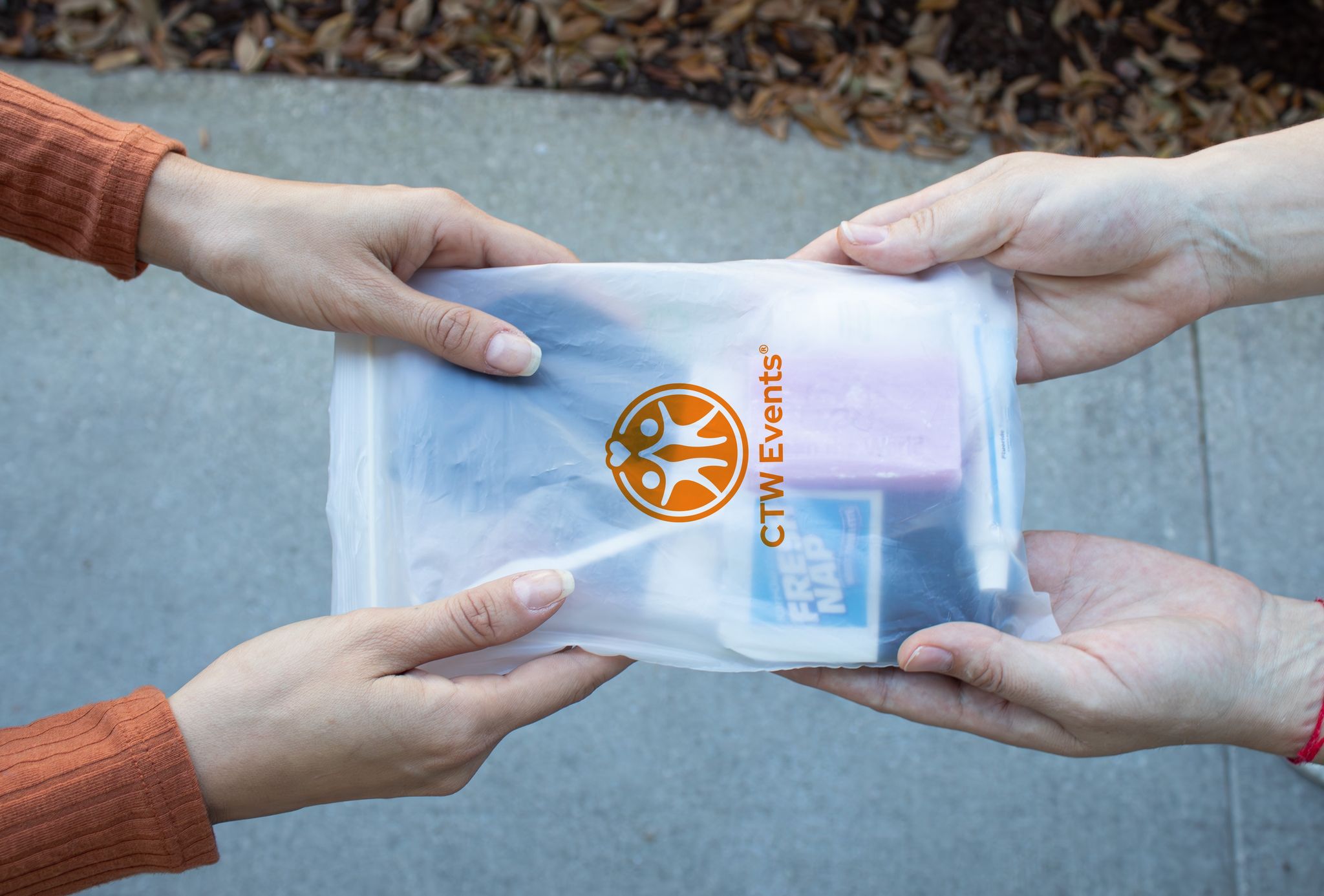
That is the thinking behind every CTW Events hygiene kit. Our standard European kit includes:
- a bamboo toothbrush and dental tablets
- shampoo and conditioner
- a bar of soap
- a handwritten wellbeing note card from the person who packed it
The note is often the part people remember most. Participants write a few words of encouragement, and it travels with the kit to the person who receives it. A bag of products becomes something personal.
Kits never replace the cash funding charities rely on. They complement it, putting useful products into the hands of partners who know their communities best and are already supporting people every day.

Charities Are Stretched, So Every Kit Has Somewhere to Go
Charities are feeling the squeeze too. The Charities Aid Foundation found in October 2025 that 83% of UK charities had seen demand for their services rise over the previous 12 months, and only 11% said they had been able to meet that rise smoothly.
That is why every CTW Events kit experience is matched to a charity partner that needs the resources. Once you book your event, CTW Events finds a partner close to the need and confirms how many kits they can take and when they can receive them. Every kit your people build already has somewhere to go.
How Your Next Event Becomes the Place Where Support Happens
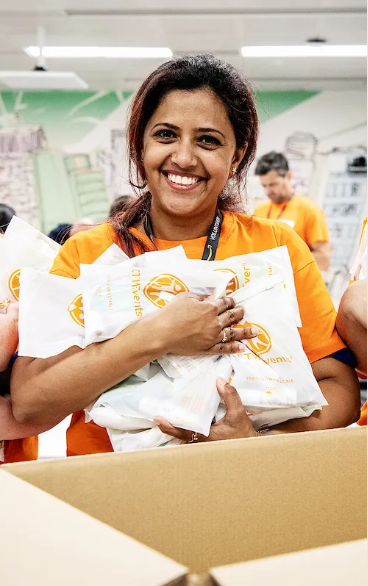
Here is the part we love. Your organization already brings people together: conferences, offsites, kick-offs, customer events and office days. Those moments are full of energy, and most already include a slot for connection or team building. With CTW Events, that slot becomes hands-on corporate volunteering with a real result for people in your community.
It also removes one of the biggest barriers to volunteering. In England, work commitments are the most common barrier to formal volunteering, cited by 51% of people in the DCMS Community and Engagement Survey 2025/26. Building kits inside an event you are already running means people can take part during work time, with no extra travel and no extra day out of the office.
How a CTW Events kit experience works
- You tell us about your eventShare the date, the city, roughly how many people and the format. A Breakout brings the whole group together in one agenda slot. A Walkthrough lets people drop in across the day.
- We find the right charity partnerCTW Events matches your event with a charity or community partner that needs the kits.
- We bring everythingCTW Events sources the products, ships the materials and sets up the build stations.
- Your people buildTeams assemble kits side by side and write their personal notes. Your people bring the care. We bring everything else.
- Kits reach the partnerFinished kits are handed over to the receiving partner, with CTW Events supporting the handover.
- You share the resultEveryone leaves knowing exactly how many kits they built together and where those kits are going.

Real Kit Experiences Across Europe
CTW Events has brought hygiene kit experiences to conferences, trade shows and corporate events across the UK and Europe. A few recent examples:

Planning Tips for Event, People and CSR Leads
- Think about where you are. Tell us the city and venue, and CTW Events will find a charity partner nearby that needs the kits.
- Pick the right format. A Breakout suits offsites and kick-offs. A Walkthrough suits conferences, expo floors and registration areas.
- Tell people why, with care. A two-minute brief on hygiene poverty, with one clear statistic, makes the build far more meaningful. Keep it respectful, remembering that some colleagues may have experienced this themselves.
- Plan your content early. Agree photo consent and what you will share afterwards, so your internal communications team has a story ready to go.
- Celebrate together. Share the number of kits your people supported and what the partner can now offer the people it works with, so everyone can see the difference in their community.
Turn your next event into real support for your community
Tell us about your event, and CTW Events will come back with a kit experience, a matched charity partner and a clear plan. Your people bring the care. We bring everything else.
Request a proposalOr see how 600 kits came together at IMEX Frankfurt
Frequently Asked Questions
What is hygiene poverty?
Hygiene poverty means being unable to afford the basic products needed to stay clean, such as soap, toothpaste, shampoo, deodorant and laundry detergent. It often stays hidden because people go without quietly.
How many people live in hygiene poverty in the UK?
An estimated 4.2 million adults in the UK were living in hygiene poverty in 2024, up 1.1 million since 2022, according to The Hygiene Bank and YouGov.
Is hygiene poverty a problem in Europe as well?
Yes. In France, 43% of adults say the economic climate has led them to cut back on hygiene products for budget reasons, and close to 4 million people go without at least one essential product, according to the 2026 Ifop barometer for Dons Solidaires.
What is inside a CTW Events hygiene kit?
The standard European kit includes a bamboo toothbrush, dental tablets, shampoo, conditioner, a bar of soap and a handwritten wellbeing note card from the person who packed it.
Where do the kits go after the event?
Every kit goes to a charity or community partner that CTW Events finds for your event, one that needs the resources. CTW Events supports the handover to the partner.
Is a CTW Events kit experience a team-building activity?
It can sit in the same agenda slot as team building and brings people together in a similar way. The difference is the outcome: your group builds useful kits for people in need, matched to a real charity partner, with a clear total of kits supported.
How long does a session take, and how many people can join?
Timings and group sizes are agreed for each event. As one example, trade media guests at the Royal Horseguards Hotel in London built 200 hygiene kits in 45 minutes.
Where can CTW Events run hygiene kit experiences?
CTW Events plans and delivers social impact kit-building activations at corporate events, conferences and offices in 28 European countries, including the UK.
CTW Events plans and delivers social impact kit-building activations at corporate events, conferences and offices in 28 European countries, including the UK. Part of the Clean the World Global family of brands, CTW Events was named Highly Commended for Event Industry Contribution at the International Confex Event Supplier Awards 2025. Have a question first? Visit our FAQ page.
Sources
- The Hygiene Bank and YouGov. Hygiene Poverty in 2024, May 2024. https://thehygienebank.com/wp-content/uploads/2024/05/The-Hygiene-Bank-Hygiene-Poverty-in-2024-Report-May-2024.pdf
- The Hygiene Bank. What is hygiene poverty? https://thehygienebank.com/who-we-are/what-is-hygiene-poverty/
- Ifop for Dons Solidaires. Baromètre Hygiène et Précarité en France, 6th edition, April 2026 (4,002 adults in France). https://www.donsolidaires.fr/wp-content/uploads/2026/04/Infographie-Barometre-Hygiene-2026-VDEF.pdf
- Eurostat. People at risk of poverty or social exclusion in 2025, April 2026. https://ec.europa.eu/eurostat/web/products-eurostat-news/w/ddn-20260430-1
- Charities Aid Foundation. Charities face mounting challenges of rising costs and increased demand, 30 October 2025. https://www.cafonline.org/home/about-us/press-office/charities-face-mounting-challenges-of-rising-costs-and-increased-demand
- Department for Culture, Media and Sport. Community and Engagement Survey 2025/26: volunteering and charitable giving. https://www.gov.uk/government/statistics/community-and-engagement-survey-202526-volunteering/community-and-engagement-survey-202526-volunteering-and-charitable-giving-report
All statistics checked on 12 November 2026. Each figure describes need in the wider community. It is not a measure of what any single event produced.